Hidden Disabilities Sunflower Program: What It Is & How It Works
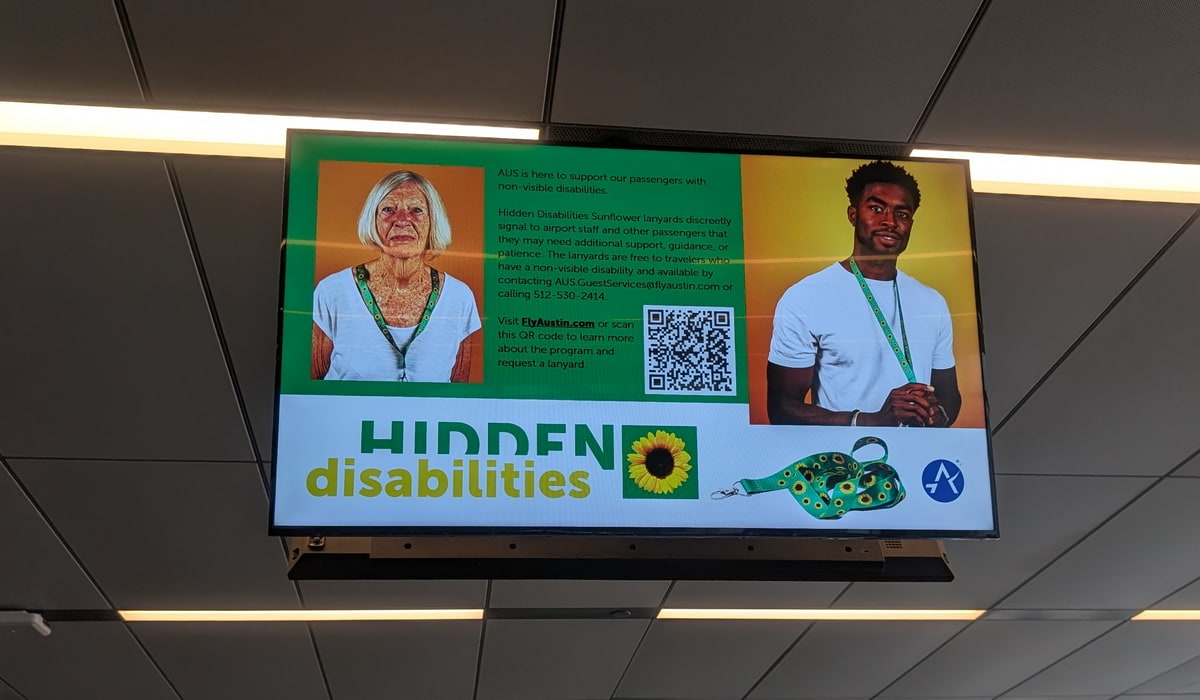
While traveling, I have noticed airport signage mentioning the Hidden Disabilities Sunflower, but typically the information is very limited, so I decided to do some research on what it is, how it works, and how it helps people.
What is the Sunflower Program?
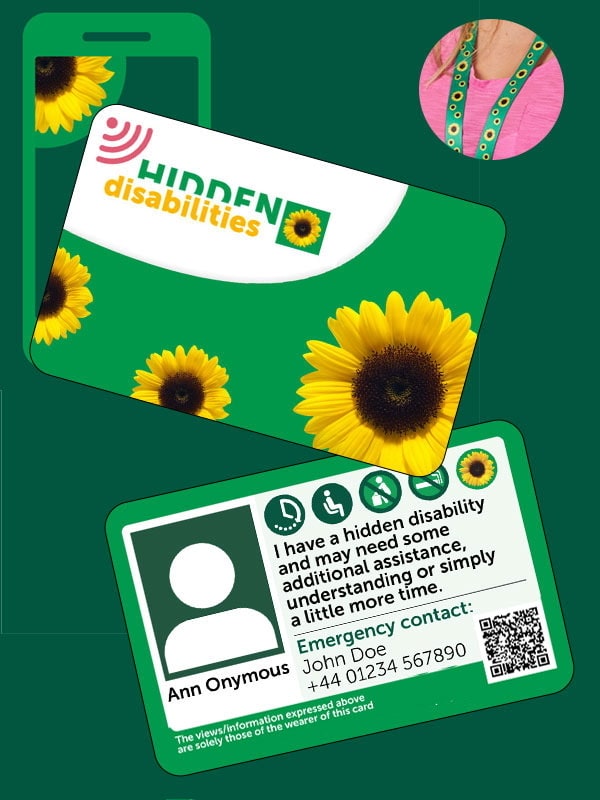
The Hidden Disabilities Sunflower Program is an internationally recognized initiative that helps people with non-visible (hidden) disabilities discreetly signal that they may need extra assistance, patience, or understanding. The motto of the program is Making the Invisible Visible. The program uses a sunflower lanyard and ID card that can (but is not required to) indicate what assistance may be needed. Airport employees, airline staff, and others are trained to look for these Sunflowers and how to interact with those wearing them.
Watch a 45-second video explaining Hidden Disabilities.
The program began back in 2016 at Gatwick Airport (LGW) and is now recognized by many airports, railways, hotels, public spaces, businesses, universities, and other organizations around the world. Disabilities include but are not limited to autism, ADHD, anxiety disorders, blindness, chronic pain conditions, dementia, epilepsy, and sensory processing difficulties. As well as other neurological, cognitive, or health conditions that are not visible to others. There is currently a list of over 900 non-visible disabilities on the HD Sunflower website.
According to the Sunflower website, “Globally, 1 in 6 [16.7%] of us live with a disability. That is approximately 1.3 billion people.” In the United States, disabilities affect more than 1 in 4 (28.7%) of adults. (source CDC.gov).
There are currently 30 airlines and 325 member airports around the world that have joined the Hidden Disabilities Sunflower program. In the United States, there are 124 airports that have launched or are in the process of launching the program.
How do I get a Sunflower?
Sunflowers are free from your local member airport (check their accessibility page); some airports also have them at the information desk prior to going through (TSA) security. They can also be purchased online from the HD Sunflower website and can even be customized. You can also order a customized card online (for $19) that can include a photo, emergency contact information, disability icons, and more. They even offer the Sunflower Extra ID card (for $30, plus $10 per year) that has a QR code, NFC, and more. The online store also offers stickers, wristbands, hats, pins, shirts, etc., as well as membership information for organizations to join.
Below is a list of some member airports with information on how you can obtain a lanyard from them.
- AUS—Accessibility Services
- DFW—Hidden Disabilities Sunflower Program
- IAD—Disability Services
- JFK—Invisible Disabilities Services
- LHR—Non-visible Disabilities
- MEM-Hidden Disabilities Sunflower Lanyard Request
- SLC—Hidden Disabilities Sunflower
To find your local local airport I recommend doing a web search for your airport name and Sunflower Program, for example, “JFK Sunflower Program”.
How do I use my Sunflower?
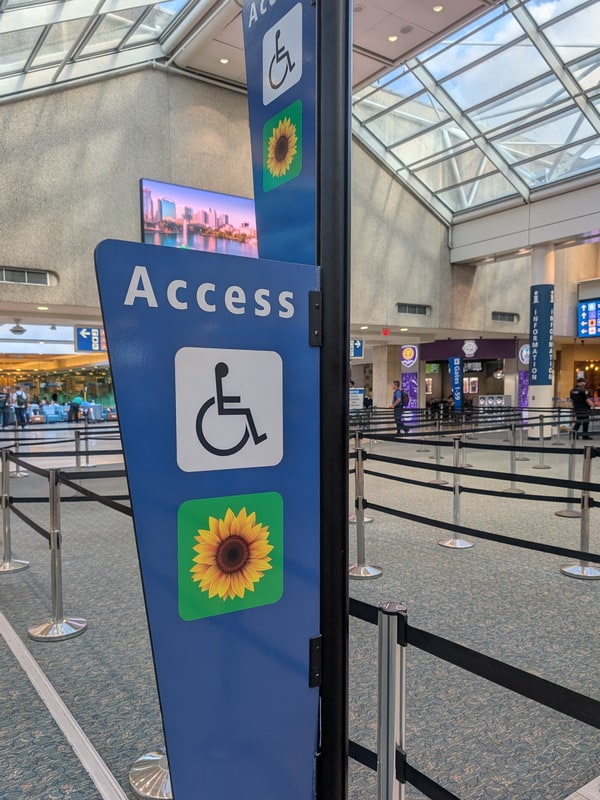
All you need to do is wear your Sunflower item (such as a lanyard or wristband) so others can discreetly recognize you. You don't need to say what your disability is or show your Sunflower card. But you may wish to show your card if it has icons or information that may be helpful to staff. Many airports have TSA security lines, employees wearing lanyards, and other signage indicating areas that are optimized for Sunflower travelers. The Sunflower website also has a map (route planner) that will help you locate places that are members and support the Sunflower Program.
Related
Closing Thoughts
During my research I discovered that The Centurion Lounge has adopted the Sunflower Program at 19 of its lounge locations. I think this is a great program, and I have seen it advertised over the years at airports and even seen an employee at a security checkpoint wearing one. I also think that with awareness, more people with and without non-apparent disabilities will join the mission to make travel more accessible.